Black T-Shirts
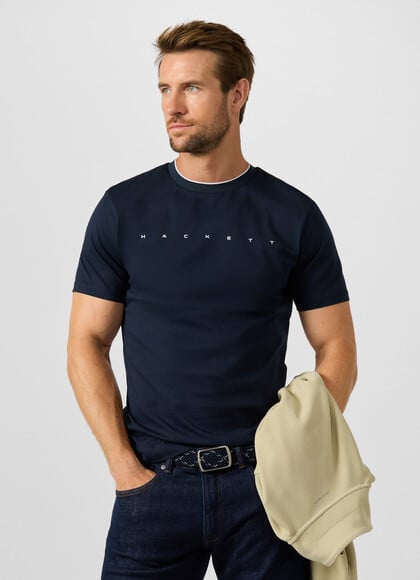
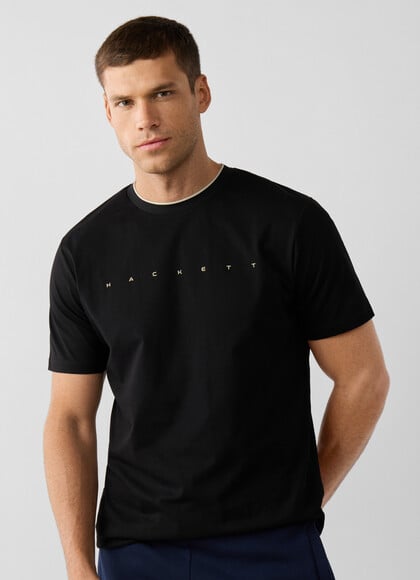
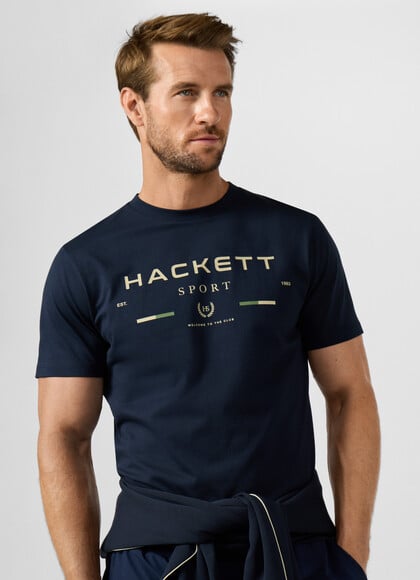
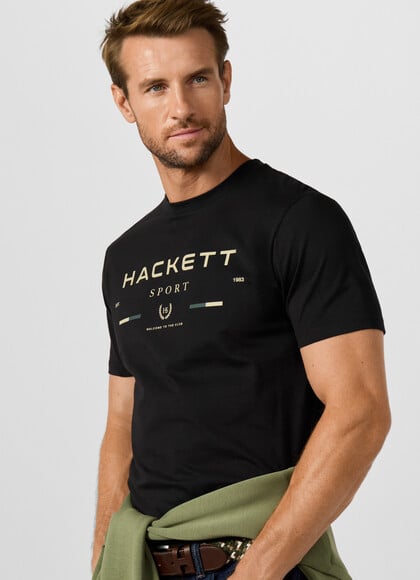
Men's black t-shirts
Men's black t-shirts do more work than any other colour in the drawer, moving from a training session to a late dinner without a change of plan.
Getting a true black to last
A men's black t-shirt is judged less on cut than on how long the colour itself holds up, and the range uses a deep pigment-dyed finish set through multiple dye baths to achieve a true black rather than the greyish cast cheaper cotton falls into after a handful of washes. At 190-210 g/m², the fabric carries enough density that the black reads solid rather than patchy under direct light. A sulphur-dyed alternative, used on some heavier styles, bonds more deeply into the cotton fibre and resists fading for considerably longer than a standard reactive dye.
Black cotton absorbs more heat than lighter colours in direct sun, a small but real consideration for anyone wearing one through a hot afternoon rather than an evening.
Why black fades unevenly
Repeated washing strips dye from the surface of cotton fibres before it strips from the core, which is why a faded black t-shirt often turns patchy rather than uniformly grey. Turning the garment inside out before washing protects the visible surface from the friction that accelerates this fading.
A black crew neck under a charcoal wool blazer with dark denim, for an evening that stays sharp without a shirt underneath.
The same tee with black trousers and white trainers for a look that reads considered rather than simply monochrome.
Styling black without looking flat
A men's black t-shirt benefits from texture elsewhere in the outfit — a ribbed knit, a textured wool, a raw denim — since flat black paired with flat black can read as one-dimensional under bright light.
Why do black t-shirts fade to grey over time?
Fading happens because washing gradually strips dye from the outer layer of the cotton fibre faster than from its core, leaving a lighter, greyer surface tone. Hot water and harsh detergent accelerate this considerably compared with cold washing. Turning the t-shirt inside out before washing is the single most effective way to slow the process.
Is pigment dye or reactive dye better for black t-shirts?
Pigment dye sits on the surface of the fibre and gives a deeper, more matte black initially, while reactive dye bonds chemically and holds its colour longer through repeated washing. Sulphur dye offers the best of both for black specifically, bonding deeply while still achieving true depth of colour. Most premium black t-shirts use sulphur or reactive dyeing rather than pigment alone.
Does a black t-shirt work for both smart and casual occasions?
A well-cut black tee in a dense, true-black cotton moves easily between the two, provided the rest of the outfit signals the occasion rather than the tee itself. Pairing it with tailoring pushes it smarter; pairing it with denim and trainers keeps it casual. The fabric quality matters more here than in almost any other colour, since a thin or faded black reads cheap instantly.