White Jumpers



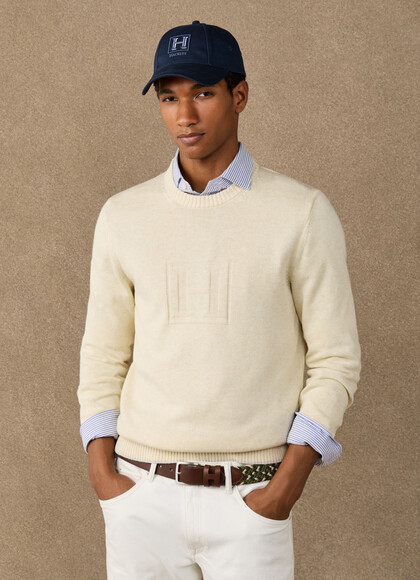
Men's white jumpers
Men's white jumpers ask more of both the wool and the wearer than any other shade, a colour that shows its quality immediately or not at all.
Why white wool needs a cleaner fibre
A men's white jumper relies on an undyed or lightly bleached wool base, since white shows any natural yellowing in the fibre far more readily than a darker colour would disguise. Merino wool, with its finer, more consistent fibre, takes a clean white better than coarser lambswool, which can carry a faint cream undertone even after bleaching. A fully fashioned rib at the cuff and hem, knitted to shape rather than cut and sewn, keeps the white knit looking finished rather than raw at the edges.
A tight 12-gauge knit, with twelve stitches per inch, gives white jumpers a smoother, less textured surface than a chunkier knit, which shows more visible shadowing between stitches under bright light.
Keeping white wool looking white
Wool yellows over time from oxidation and body oil far more visibly in white than in any other colour, particularly at the collar and cuffs where contact is greatest. A white jumper stored properly, away from direct sunlight and in a cool, dry space, resists this yellowing considerably longer than one left out or stored damp.
A white crew-neck jumper over an open-collar shirt with grey flannel trousers, for an office look that reads crisp without a jacket.
The same jumper with dark denim and white trainers for a weekend that leans entirely on the contrast of clean white against indigo.
Does white wool mark more easily?
A men's white jumper shows marks, spills and general wear far more visibly than a darker colour, which is worth factoring into how often it gets worn against how carefully it needs to be cleaned.
Why do white wool jumpers turn yellow over time?
Yellowing comes from a combination of oxidation, body oils and exposure to sunlight, all of which affect wool's natural protein fibre over time. Storage matters as much as wear — a jumper left folded in a damp space yellows faster than one stored dry. Washing with a wool-specific detergent rather than standard powder also slows the process.
How often can a white jumper be dry cleaned?
Dry cleaning a white wool jumper two to three times per season is generally safe without damaging the fibre, though more frequent cleaning can gradually strip natural oils from the wool. Spot cleaning marks between full cleans extends the gap between treatments. Hand washing at home is a gentler alternative for lighter soiling.
Is white wool harder to maintain than other colours?
White shows marks, yellowing and general wear more visibly than darker or patterned wool, which does make it a higher-maintenance choice. The trade-off is a versatility that pairs with almost anything in a wardrobe. Careful storage and prompt spot cleaning keep the maintenance manageable for most wearers.