Belts
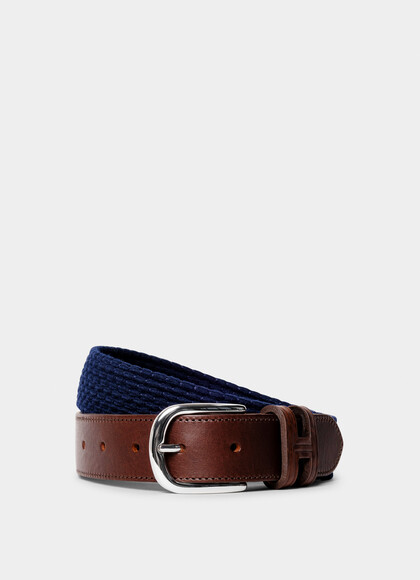
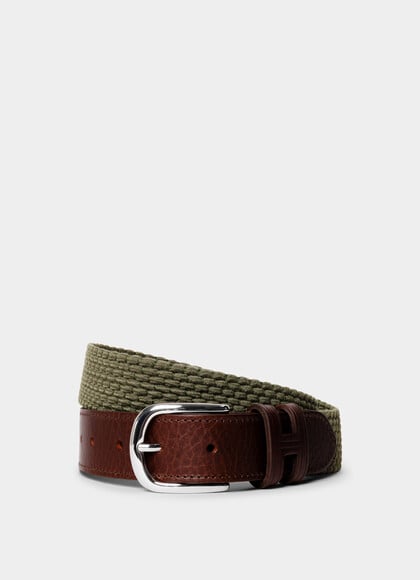
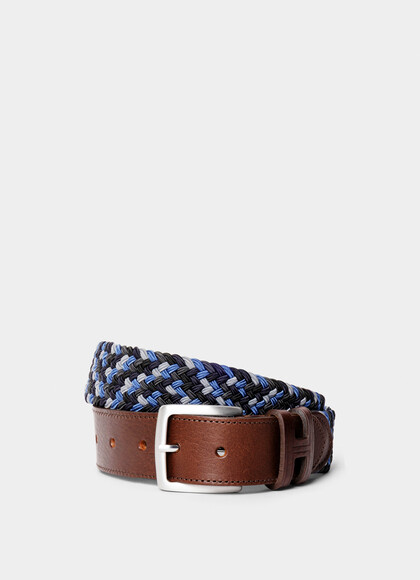

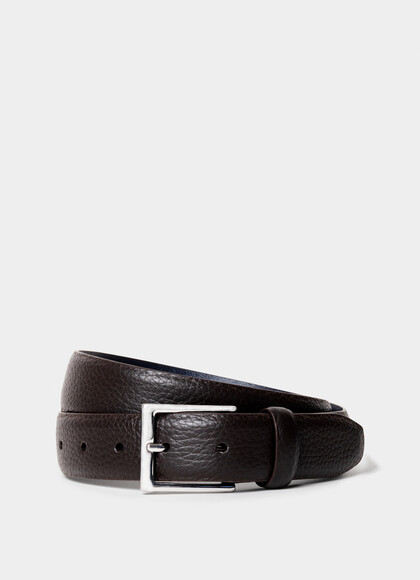
Men's belts
Hackett London's men's belts are cut from a single piece of vegetable-tanned leather with no visible centre seam — the construction that ages best under a tailored suit and daily use.
Leather and thickness
Leather at 3.5 to 4 millimetres thick holds the rigidity needed to carry a wool trouser without folding at the buckle, exactly where a thinner leather gives first. Men's belts in the collection use calfskin tanned in small workshops that specialise in belt leather, an origin that accounts for the even finish across the visible surface.
Buckles and finish
A solid brass buckle — never hollow — is standard on the dressier models, since it holds up better to the daily twist of fastening than a lighter piece. A hand-applied beeswax edge finish seals the fibre and stops it fraying over the years, a detail that separates well-made men's belts from the generic sort.
Getting the width right
A 3-centimetre width is standard for tailoring within men's belts, while 3.5 to 4-centimetre models suit chino or denim better. Colour should always follow the shoe, not the jacket.
Why the tanning method matters
Well-made men's belts in vegetable-tanned leather develop an individual patina over years, while chrome-tanned leather stays uniform but gains noticeably less character over time.
How do you find the right size for a men's belt?
Belt size usually runs two sizes above trouser size in centimetres, so the buckle sits centred on the middle hole once fastened. If the belt runs noticeably long past the final loop, it's worth sizing down.
Can vegetable-tanned leather belts take daily wear?
Yes — daily use actually improves the result, since vegetable-tanned leather develops a progressive patina at the points of most contact. Alternating between two belts is worth doing with daily wear, so the leather rests and recovers shape between uses.