Formal shoes
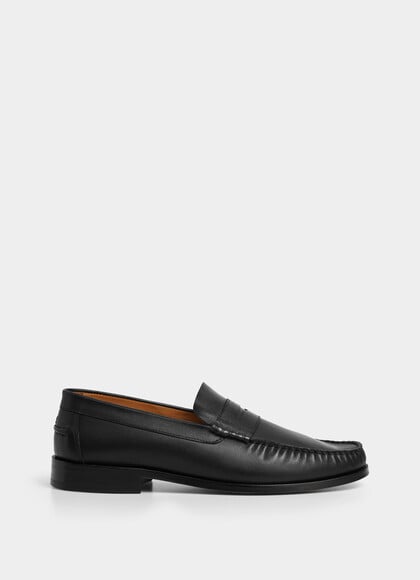
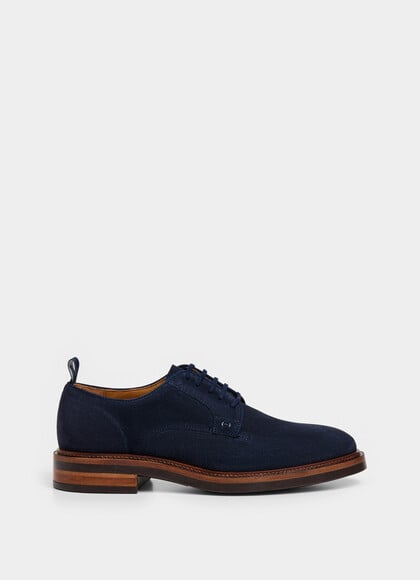
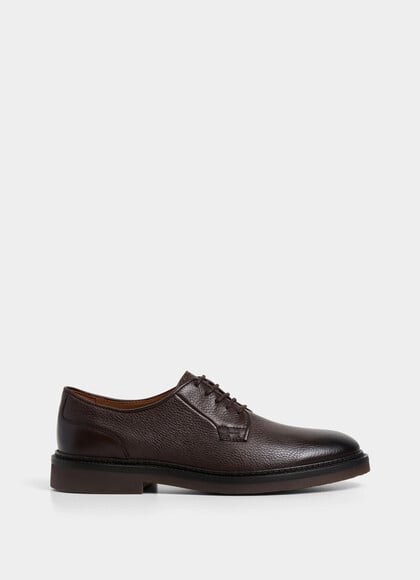
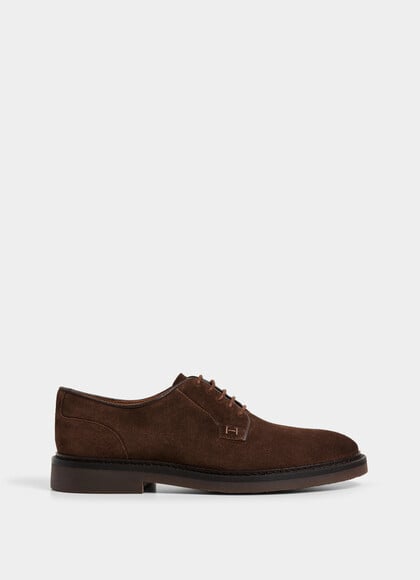
Men's formal shoes
Hackett London's men's formal shoes are built on a narrow last in box calf leather — the pairing that finishes a suit properly right down to the ankle.
Last and construction
A Blake stitch construction gives a lower, more elegant profile than a Goodyear welt, at the cost of some repairability, and it's the technique reserved for the most formal oxford models within men's formal shoes. Men's formal shoes in the collection use box calf calfskin with a mixed vegetable-chrome tan, a process that gives natural shine without demanding the frequent polishing a purely vegetable-tanned leather asks for.
Styles: oxford, derby and monk
The oxford with closed lacing — where the eyelets are stitched beneath the vamp — is the most formal shoe among men's formal shoes, kept for a dark suit. The derby, with eyelets stitched on top of the vamp, gives a wider fit and works better for daily office wear; the monk strap swaps laces for a leather strap and buckle, sitting between the two in formality.
How to wear formal shoes
Two concrete pairings within men's formal shoes:
A black oxford with a charcoal wool suit and a matching sock — as formal as it gets, for a morning meeting.
A dark brown derby with a navy suit and a burgundy sock — a slightly more relaxed register that still holds its own in the office.
What's the difference between an oxford and a derby shoe?
An oxford has its lacing eyelets stitched beneath the vamp, giving a closed, more formal profile. A derby has them stitched on top, with a more open fit that's more comfortable and slightly more versatile day to day.
How do you keep the shape of men's formal shoes?
With cedar shoe trees, fitted straight after taking them off, since the wood draws moisture out of the leather and stops it warping as it dries unsupported. Letting them dry without trees after a wet day is what shortens the life of the toe cap fastest.