Flannel Blazers
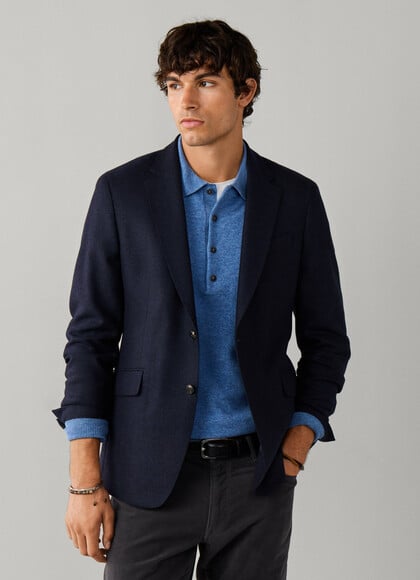
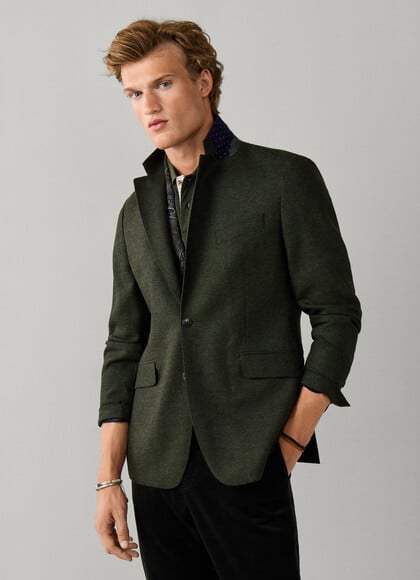
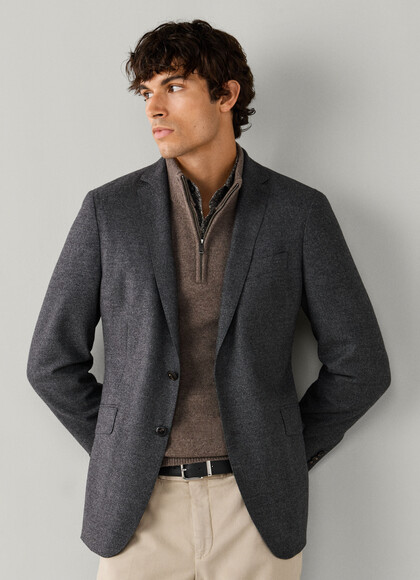
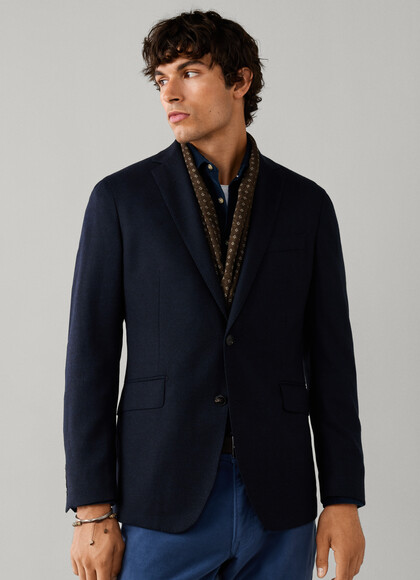
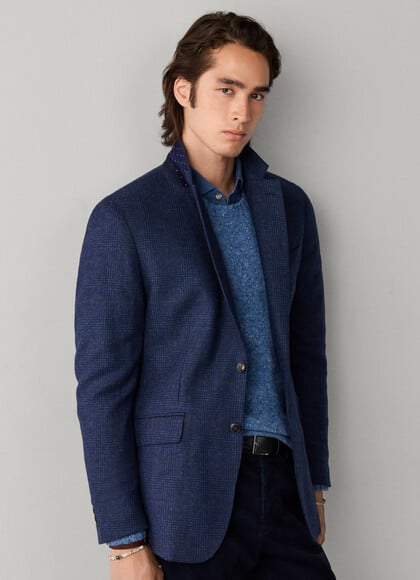
Men's flannel blazer
The men's flannel blazer from Hackett London is one of the most enduring pieces in the British winter wardrobe: a brushed wool fabric that combines immediate softness, reliable warmth and a versatility that few other cloths can match across registers.
What flannel is and how it differs
Wool flannel is produced from carded fibres — shorter and more irregular than those used in worsted — that are then raised on both surfaces to create its characteristic soft nap. The result is a fabric with a warm, slightly textured hand that retains heat more effectively than worsted at the same weight. Hackett London selects merino wool flannel at weights between 280 and 340 g/m²: heavy enough to hold structure through a full working day, light enough to wear without fatigue. The merino used in the leading models is sourced from high-altitude Australian farms, where the fibre develops a fineness that results in a softer hand than standard wool flannel.
Unlike tweed or worsted, the men's flannel blazer has a uniform, compact surface that adapts well to both formal cuts and more relaxed registers. Combined with the natural shoulder construction used across the Hackett London range, this produces a blazer that always looks composed without appearing to try.
How to wear a flannel blazer
The Hackett London men's flannel blazer is a piece that works across seasons and settings. Two concrete combinations:
Mid-grey flannel blazer over a blue denim button-down shirt, hazel cotton chinos and brown leather chelsea boots: the balance of structure and ease that defines the contemporary British wardrobe.
The same blazer over a cream cashmere roll-neck, dark grey wool trousers and polished derbies: the register rises, the texture of the fabric adds visual depth without adding volume.
Grey — from pearl to slate — is the reference colour for flannel in British tailoring tradition. Hackett London also offers blue charcoal and tobacco brown in flannel, extending the pairing options across an existing wardrobe.
Care and maintenance
Wool flannel requires specific attention. Dry cleaning is the recommended method; between uses, brushing the surface with a soft-bristle cloth brush in the direction of the nap keeps the pile compact and removes surface dust. Flannel is prone to pilling — small surface balls — if subjected to sustained abrasion: avoid wearing rigid-strap backpacks directly over the blazer. A wide-shoulder hanger, preferably in wood, ensures the shoulders retain their shape over time.
How to find your size in a Hackett flannel blazer
Hackett London men's flannel blazers follow standard European sizing. Flannel has limited inherent stretch: if in doubt between two sizes, opt for the larger rather than the smaller, particularly if you plan to wear a heavy knit underneath. Slim fit models have a defined waist and tapered sleeves; those who regularly layer will find the regular fit more practical without compromising the overall silhouette.
Is a flannel blazer warm enough for winter?
At 300 g/m² or above, wool flannel is one of the most thermally effective fabrics for cold-weather tailoring. The carded fibre structure traps more air than worsted at equivalent weight, providing reliable warmth without requiring additional lining. For temperatures below freezing, pairing a flannel blazer with a merino roll-neck underneath is sufficient for most urban environments.
Does flannel crease easily?
Less than most people expect. The fibrous structure of flannel tends to absorb and release creases naturally, particularly if the blazer is hung correctly after each wear. Deeper creases — from prolonged sitting — generally relax within minutes of standing, aided by body heat. For persistent creases, a handheld steamer is more effective and more gentle on flannel than a direct iron.
How does flannel differ visually from gabardine?
Flannel has a soft, slightly napped surface — matte, warm-looking and diffuse in the way it catches light. Gabardine, by contrast, is a tightly woven worsted with a diagonal twill construction, a smooth surface and a faint sheen. In a blazer, flannel absorbs light evenly; gabardine reflects it more directly. The choice depends on the desired register: flannel reads as relaxed and autumnal, gabardine as formal and season-spanning.