Waistcoats


Men's waistcoats
Men's waistcoats are the smallest piece of tailoring with the biggest effect on how formal an outfit reads, adding structure without the weight of a full jacket.
Fabric and construction
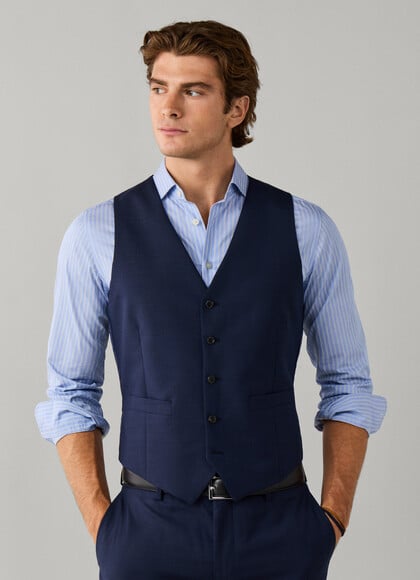
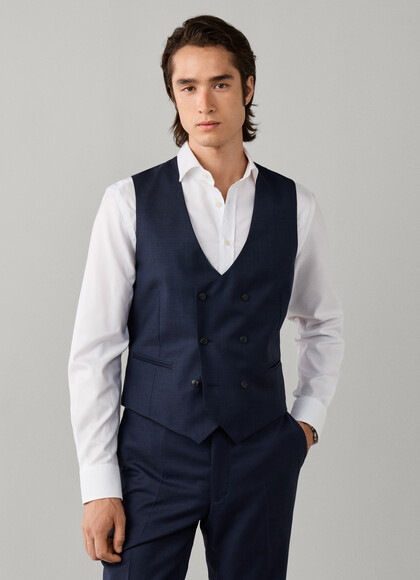
The range spans wool flannel, tweed and plain worsted wool, each cut with a five-button front and an adjustable strap at the back to keep the fit close to the body regardless of what's layered underneath. The back panel runs in a lighter lining fabric rather than the outer wool, both for breathability and to keep the strap adjustment working smoothly over years of wear. This construction has remained largely unchanged across Hackett London's tailoring since the brand's earliest collections.
Wearing men's waistcoats outside a matching suit
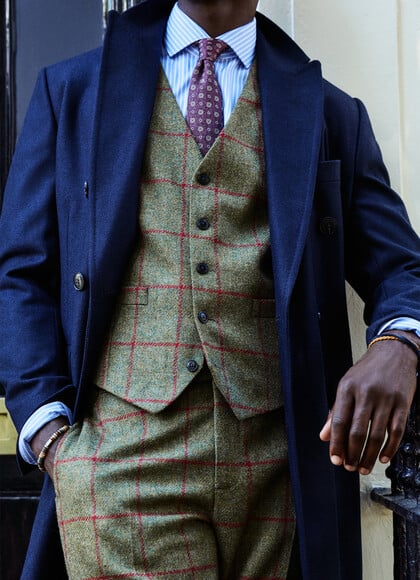
A waistcoat in tweed or flannel, worn without its matching jacket, has become one of the more versatile pieces in country and smart-casual dressing, paired equally well with jeans or tailored trousers. This flexibility is exactly why a waistcoat bought separately earns more wear than one confined to a single three-piece suit.
A charcoal wool waistcoat under a navy blazer for added texture in the office.
A tweed waistcoat over a shirt alone, jacket left at home, for a country weekend.
Can a waistcoat replace a jacket entirely?
Yes, in smart-casual settings a waistcoat worn over a shirt without a jacket is widely accepted, particularly in tweed or flannel, though it reads more casual than a full jacket-and-waistcoat combination.
How tight should a waistcoat fit?
A waistcoat should sit close to the body without pulling at the buttons when seated, with the back strap taking up any remaining slack rather than the front fabric stretching.
What fabrics work best for a standalone waistcoat?
Tweed and flannel wool both work well as standalone waistcoats since their texture reads intentionally separate from a plain suit fabric, avoiding the look of a jacket simply left at home.