Flannel Blazers
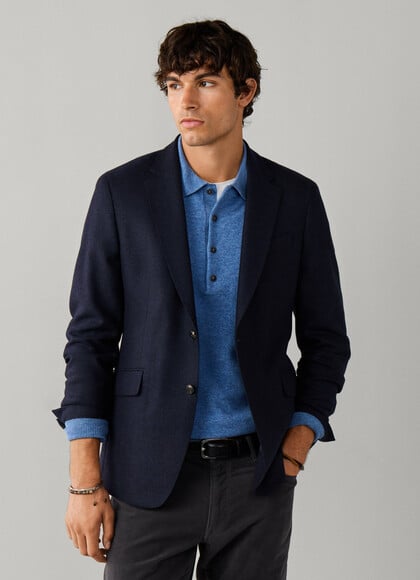
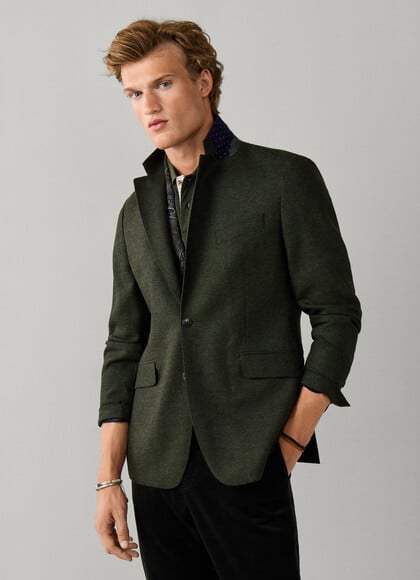
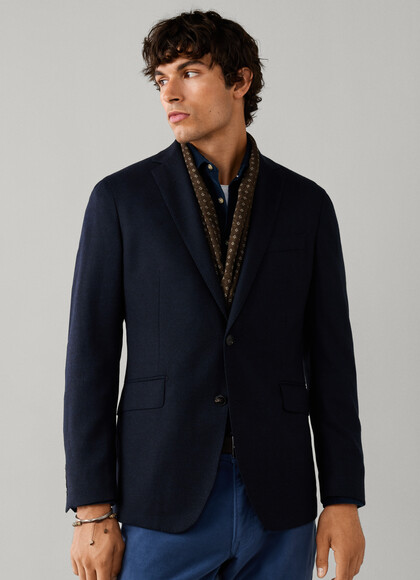
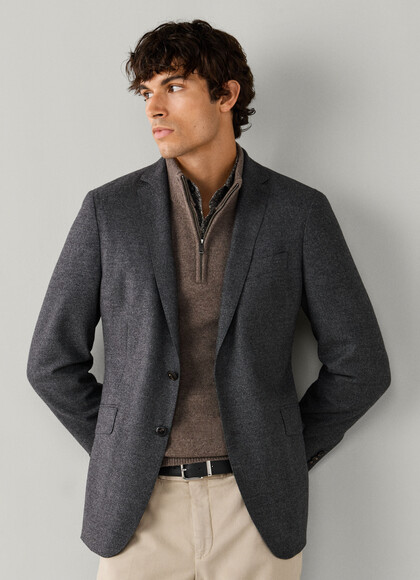
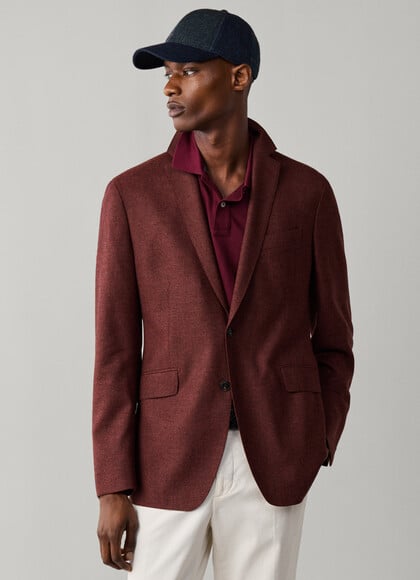
Men's flannel blazer
A men's flannel blazer carries a softness that worsted wool doesn't quite have, brushed to a texture that reads warmer and slightly more relaxed without losing any structure.
Fabric and finish
Woven from wool flannel at a weight around 300-330g/m², the cloth is brushed after weaving to raise a fine nap on the surface, giving it a softer hand-feel and a slightly muted finish compared with a plain worsted weave. A half-canvas construction in the chest lets the jacket move naturally, developing a better drape after a handful of wears than a fused alternative.
Why flannel suits colder-weather tailoring
The brushed surface traps a thin layer of warm air close to the body, which is why flannel has remained the standard choice for autumn and winter blazers since Hackett London's earliest collections. A flannel blazer also creases less visibly than a plain worsted wool, since the raised nap disguises fine lines that would otherwise show clearly.
A grey flannel blazer with a merino jumper and cords for a cold-weather office day.
The same blazer over a shirt for a smart-casual dinner.
Is flannel too warm for indoor wear?
Flannel is warmer than a plain worsted wool but not excessively so for indoor settings, making it a reliable choice for autumn and winter rather than a genuinely hot climate.
How is flannel different from tweed?
Flannel is brushed to a smooth, soft nap, while tweed retains a rougher, more textured surface woven from thicker yarns — both are warm, winter-appropriate wools with different finishes.
Does a flannel blazer need dry cleaning?
Dry cleaning is recommended, ideally infrequently, since over-cleaning flattens the brushed nap that gives flannel its characteristic texture and warmth.