Hackett x Cheaney
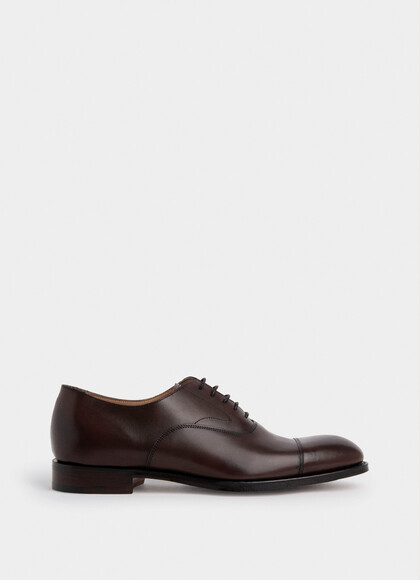
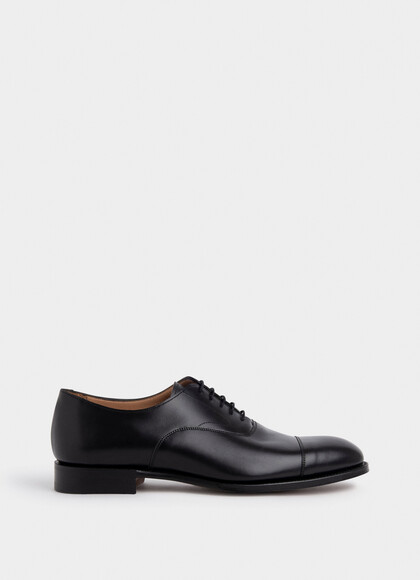
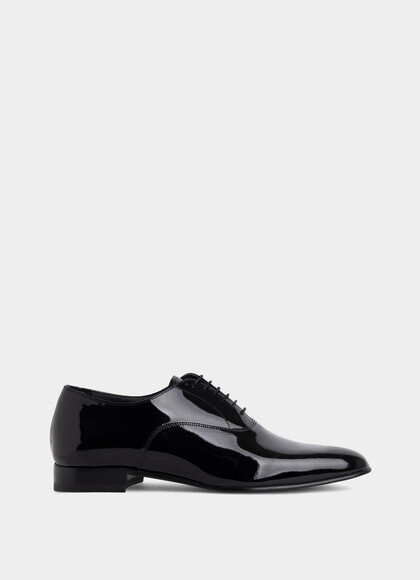
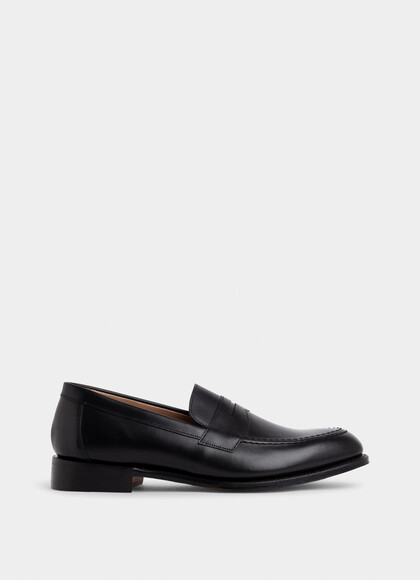
Hackett x Cheaney shoes collection
The Hackett x Cheaney shoes collection pairs Hackett London's cut with the making of Joseph Cheaney & Sons, the English shoemaker still cutting and stitching in the same Northamptonshire factory it opened in 1886.
Making and provenance
A shoe made in Northamptonshire — the region that's carried England's shoemaking tradition since the 19th century — passes through more than two hundred hand operations before it leaves the factory, a process few mass footwear brands still hold to today. The Hackett x Cheaney shoes collection runs on hand-burnished calfskin, a technique that gives the leather depth of colour rather than a flat, uniform finish.
Sole construction
The Goodyear welt construction — the same method Cheaney has used since its own founding — allows the sole to be replaced several times over the shoe's working life, unlike the single-use glued construction found elsewhere. Oxford models in the Hackett x Cheaney shoes collection carry a perforated toe cap in the Hackett logo, a detail that folds English brogue tradition into the brand's own identity.
Styles in the collection
The Hackett x Cheaney shoes collection runs to smooth leather and patent oxfords, perforated toe-cap oxfords, and loafers in leather and greased suede, the latter kept for a more relaxed register within the range. Every model shares the same English manufacturing standard, on lasts developed specifically for the European foot.
What makes Cheaney's manufacturing different from other shoe brands?
Cheaney has made shoes entirely in its own Northamptonshire factory since 1886, with Goodyear welt construction across every model, which allows for repair and resoling rather than replacement. It's a manufacturing standard very few brands hold onto outside of high-end tailoring.
Can shoes from the Hackett x Cheaney shoes collection be resoled?
Yes — the Goodyear welt construction allows the sole to be unstitched without damaging the upper or the rest of the shoe's structure. Good care with wooden shoe trees between wears extends the interval before resoling is needed.