Suits
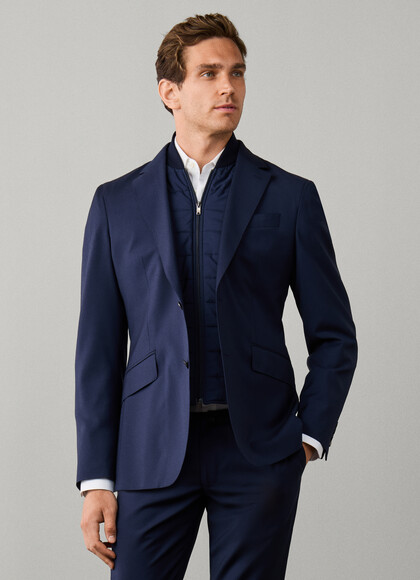
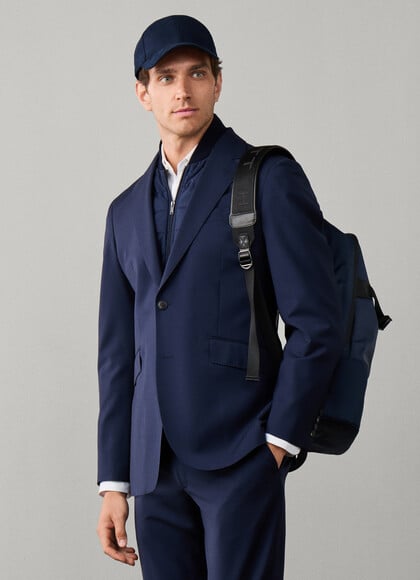
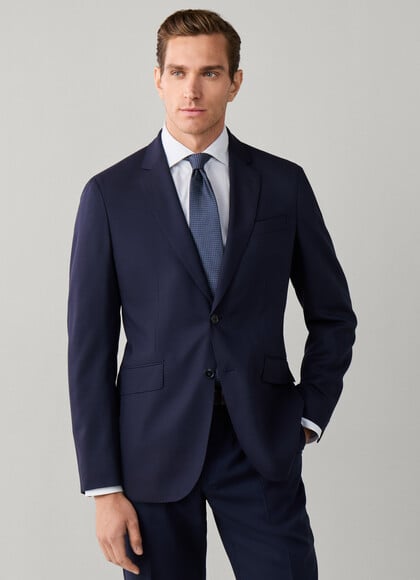
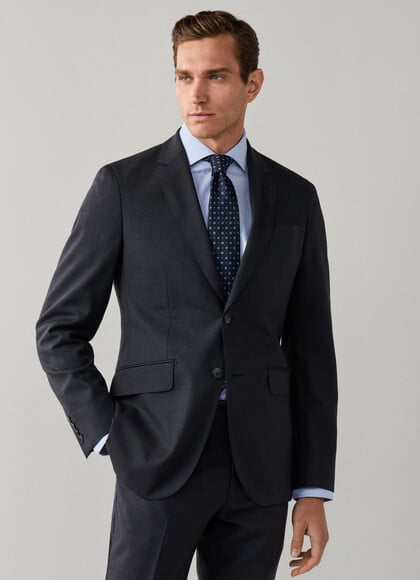
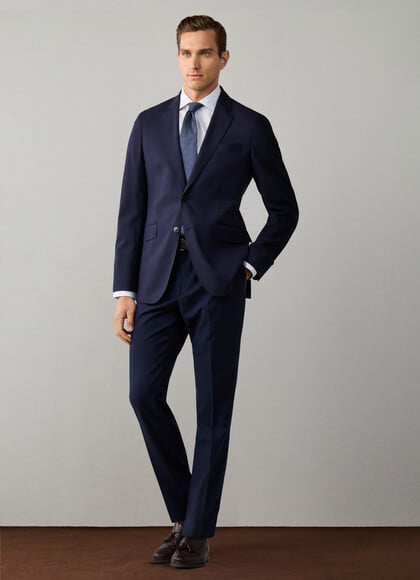
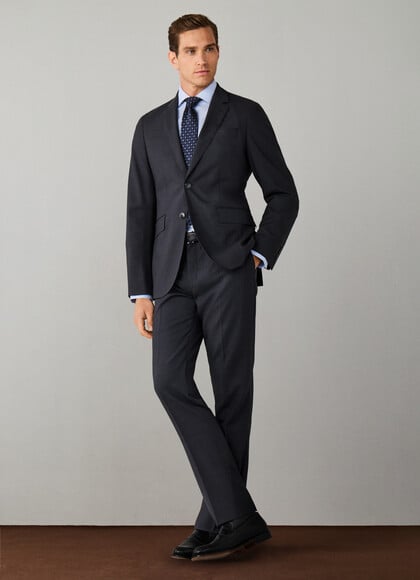
Men's waistcoats
Men's waistcoats bought separately, rather than as part of a three-piece set, are the fastest way to change the register of a suit without buying a new one.
Fabric and fit
Sold as standalone pieces, Hackett London's waistcoats are cut in wool flannel, tweed and plain worsted wool to coordinate with existing tailoring rather than only matching a single suit. A five-button front and adjustable back strap are standard, allowing the waistcoat to sit close to the body regardless of what's worn beneath it. The back panel runs in a lighter lining fabric to keep the whole piece breathable under a jacket.
Wearing men's waistcoats beyond a matching suit
A tweed waistcoat over a shirt, worn without a jacket at all, has become one of the more versatile pieces in country and smart-casual dressing — a styling approach Hackett London has supported since the label's earliest collections through its outerwear and accessories ranges. Worn under a blazer instead of a matching jacket, a contrasting waistcoat adds texture without requiring an entirely new suit.
A charcoal wool waistcoat under a navy blazer for a smart office look with contrast built in.
A tweed waistcoat over a shirt alone, no jacket, for a country weekend.
Can a waistcoat be worn without a matching jacket?
Yes, a waistcoat in a contrasting fabric, particularly tweed or flannel, works well on its own over a shirt or under a different jacket entirely, without needing to match a full suit.
How should a waistcoat fit at the back?
The adjustable strap at the back should take up any excess room so the waistcoat sits close to the body, without pulling so tight that the front buttons strain when seated.
What's the correct length for a waistcoat?
A waistcoat should sit low enough to fully cover the trouser waistband, even when reaching or bending, without extending so far down that it looks like a separate garment rather than tailoring.