Sweatshirts
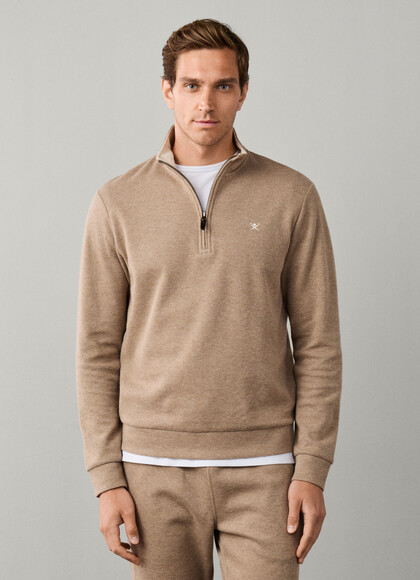

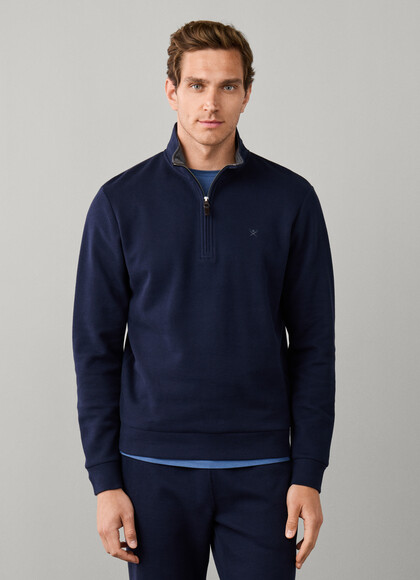

Men's sweatshirts
Men's sweatshirts have earned heavy rotation well beyond the gym, built from a fabric substantial enough to work as an outer layer on a mild day.
Fabric and construction
A men's sweatshirt at Hackett London is built from a cotton-rich loopback or brushed-back fleece at 320-380 g/m², considerably heavier than a standard t-shirt fabric and dense enough to hold its shape through repeated washing. A loopback fleece, which keeps uncut loops on the reverse rather than brushing them into a fluffy pile, gives a smoother, more structured drape than a heavily brushed alternative. Ribbed cuffs and hem, knitted at a tighter gauge than the body, keep the sweatshirt's silhouette close at the openings rather than letting it hang loose.
A reinforced set-in sleeve, stitched with a double row rather than a single seam, is what stops the shoulder from pulling apart under repeated wear and washing.
Choosing a fit
A sweatshirt cut close through the body works well layered under a field jacket, while a relaxed fit suits standalone weekend wear without anything over the top.
A navy crew-neck sweatshirt under an unstructured stone jacket with dark denim, for a commute that stays warm without a coat.
The same sweatshirt with joggers and white trainers for a Sunday that stays entirely relaxed.
Caring for heavyweight cotton
A dense men's sweatshirt holds its shape better when turned inside out before washing, protecting any printed detail and reducing the pilling that friction against a washing machine drum can cause.
What's the difference between a sweatshirt and a jumper?
A sweatshirt is built from cotton fleece, either loopback or brushed, while a jumper is knitted from wool or a wool blend using interlocking loops of yarn. Sweatshirts tend to be more casual and durable for everyday wear, while jumpers offer more warmth per weight. Both can share a similarly heavy overall weight.
Does a heavier sweatshirt last longer than a lightweight one?
Fabric above 320 g/m² generally resists pilling and thinning better than lighter sweatshirt fabric under 250 g/m², since the denser weave withstands friction more effectively over repeated wear. Reinforced seams at the shoulder also extend the garment's lifespan considerably. Washing at 30°C rather than higher temperatures helps preserve the fabric's density longer.
Can a sweatshirt be worn under a jacket?
A close-cut sweatshirt in a mid-weight cotton fleece layers reasonably well under an unstructured field jacket, though it adds more bulk than a knitted jumper of similar warmth. Choosing a slimmer fit reduces excess fabric bunching at the shoulders. Darker, solid colours read more deliberately in this pairing than bright prints.