Linen Trousers
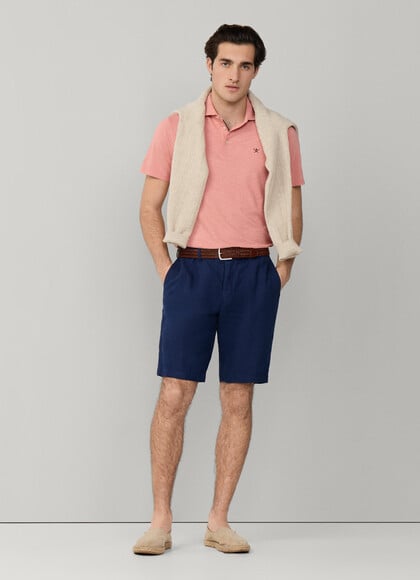
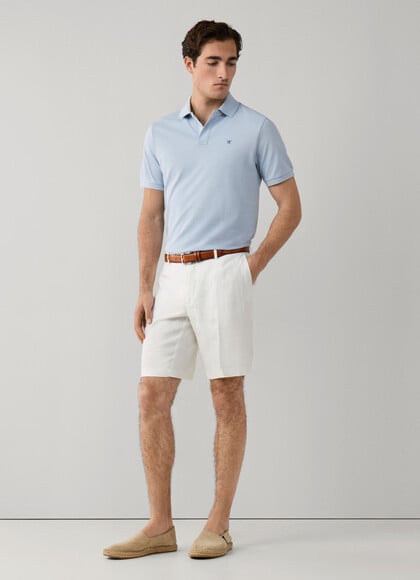
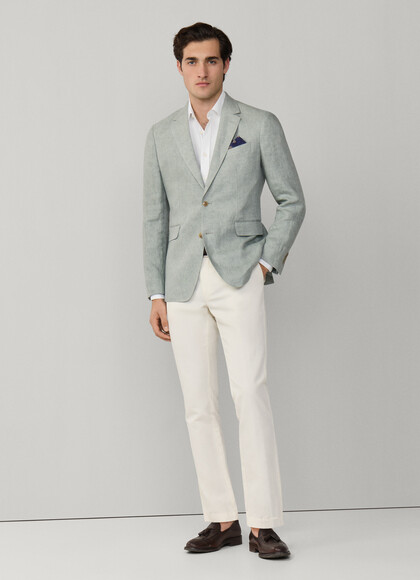
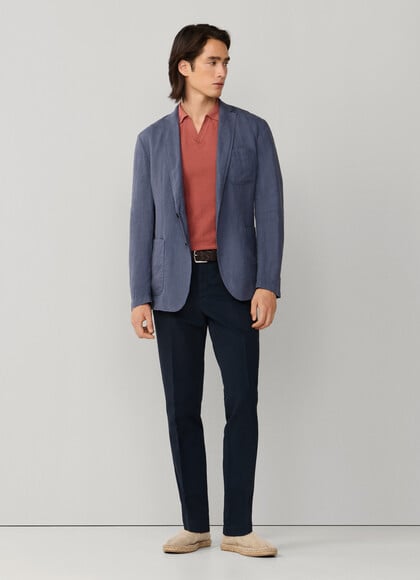
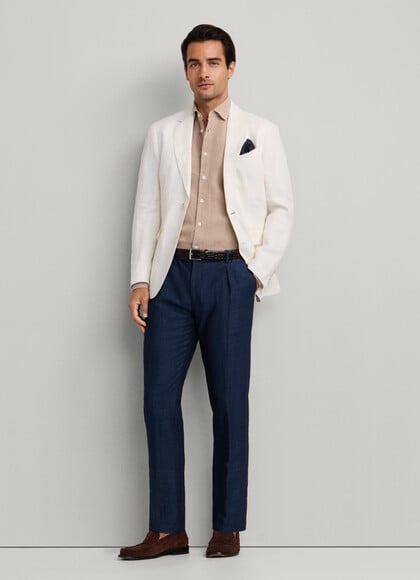
Men's linen trousers
Men's linen trousers solve the warm-weather problem cotton twill only partly manages, built from a fibre that breathes considerably better through genuine heat.
Fabric, waistband and rise
A pair of men's linen trousers at Hackett London runs on pure linen or a linen-cotton blend, typically 55% linen and 45% cotton, at 190-220 g/m² — light enough to move air through the fabric but dense enough to avoid transparency in bright sun. A tab waistband, closing with an interior hook rather than the button alone, keeps the fit clean under a shirt without the bulk of a belt buckle. Mid rise is standard, with a straight-leg or relaxed-fit cut favoured over a slim leg, since linen's natural texture suits a looser drape better than a tight silhouette.
Linen fibre is hollow at its core, which is what allows it to wick moisture away from the skin and dry considerably faster than cotton — part of why it remains the standard choice for genuinely hot climates.
Linen versus cotton trousers
Linen breathes and cools more effectively than cotton twill in real heat, though it creases more readily and needs a slightly more relaxed attitude to its finish. Linen trousers suit the warmest months; a cotton-elastane chino remains the more practical everyday choice across the rest of the year.
Stone linen trousers with a linen shirt and espadrilles, for a warm-weather lunch that stays cool without sacrificing smartness.
The same trousers with a plain t-shirt and canvas trainers for a holiday spent between beach and town.
Living with linen's creases
A degree of creasing is expected and even desirable on men's linen trousers, considered part of the fabric's natural character rather than a flaw to iron out entirely.
Do linen trousers crease more than cotton?
Linen fibres are less elastic than cotton, which means they crease more readily and hold the fold longer once formed. This is generally considered part of linen's relaxed character rather than a defect. A linen-cotton blend reduces creasing somewhat while keeping much of linen's breathability.
Are linen trousers suitable for the office?
A linen-cotton blend in a darker, more tailored cut works reasonably well for a relaxed office dress code, particularly in warmer months. Pure linen in pale colours reads more suited to holiday or genuinely casual settings. Pairing with a structured shirt helps balance linen's natural texture for smarter occasions.
How should linen trousers be washed and cared for?
Machine washing at 30°C is generally safe for linen-cotton blends, though pure linen benefits from gentler hand washing or a delicate cycle to preserve its fibre. Ironing while still damp helps manage creasing without excessive heat. Air drying rather than tumble drying reduces shrinkage and preserves the fabric's natural texture.